

When a pipe bursts or the AC stops working in July, customers search, call one of the first businesses they see and book. SEO for plumbers and HVAC companies is about being that business. Here is what to focus on, from the map pack and service pages to reviews, seasonal content and lead tracking.
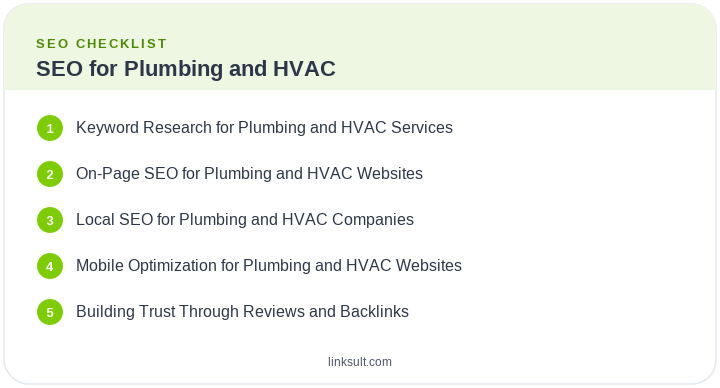
1. Make Your Google Business Profile Work Like a Dispatcher
- Pick the right primary category, such as Plumber or HVAC contractor, and add relevant secondary ones like Water heater installation service.
- If you work at customers’ homes, set a service area and hide your address unless customers visit you.
- List every service with a short description.
- Keep hours accurate, and only show 24/7 availability if someone really answers the phone.
- Add photos of your team, vans and real jobs every week.
- Reply to every review, good or bad, within a day or two.
2. Build a Page for Every Service
Water heater replacement, drain cleaning, sewer line repair, AC installation and furnace repair are different searches made by different customers. Give each core service its own page that explains the problem, how you fix it, what affects the price, typical timeframes and your warranty, with a call button at the top.
3. Create Service-Area Pages With Real Local Proof
If you serve several towns, create pages for the main ones, but only with content that is genuinely local: jobs you have completed there, common local issues such as hard water or older homes, typical response times and reviews from local customers. Copying one page and swapping the town name creates doorway pages, which Google treats as spam.
4. Plan Content Around the Seasons
AC repair searches spike in the first heatwave, while furnace and frozen pipe searches climb in winter. Publish or refresh seasonal guides a month or two before each peak: AC tune-up checklists, how to prevent frozen pipes, signs a water heater is failing. These pages attract links and maintenance plan customers.
5. Turn Every Job Into a Review
Reviews are one of the strongest local ranking factors and the first thing customers check. Send a short text with your review link right after each completed job, ask technicians to mention it, and reply to every review. Never offer incentives for reviews, because Google’s policies prohibit it.
6. Show Licenses and Build Trust
- Display your license numbers, insurance and any manufacturer certifications.
- Mention EPA Section 608 certification for technicians who handle refrigerants.
- Explain your warranties and pricing approach clearly.
- Use real team photos instead of stock images.
7. Earn Local Links and Citations
- Get listed in manufacturer dealer locators, trade associations and your local chamber of commerce.
- Keep your name, address and phone number consistent on Yelp, Angi, Nextdoor and other directories.
- Sponsor local teams or community events.
- Partner with realtors and property managers who can recommend and link to you.
8. Track Calls and Booked Jobs
Most plumbing and HVAC leads arrive by phone. Use call tracking to see which pages and Google Business Profile actions bring calls, measure booked jobs rather than clicks, and follow up missed calls and web forms quickly with an automatic text reply.
Common Plumbing and HVAC SEO Mistakes
- Hiding the phone number below the fold on mobile.
- One generic services page instead of a page per service.
- Copy-and-paste town pages.
- Ignoring reviews or replying weeks later.
- Listing a virtual office address on Google.
Plumbing and HVAC SEO Keyword Map
Most plumbers and HVAC companies get found through a handful of search types. Map each one to a specific page so every search lands somewhere useful. Replace [city] with the places you serve.
| What they need | Example searches | Page to build |
|---|---|---|
| Emergency | emergency plumber near me · AC not working · furnace repair same day | Emergency service page with 24/7 phone number at the top |
| Service needed | water heater replacement · drain cleaning [city] · AC installation | One page per service, written for your area |
| Researching cost | water heater replacement cost · how much is a new AC unit | Pricing guide pages with honest ranges and what affects them |
| Local trust | plumber [neighborhood] · best HVAC company [city] | Service-area pages with local jobs, reviews and photos |
What a Top-Ranking Plumbing and HVAC Page Includes
Use this blueprint when you build or rewrite your most important service pages:
- Phone number and "Call now" button visible without scrolling on mobile
- Service area, hours and emergency availability stated clearly
- What is included, typical timeframes and how pricing works
- License, insurance and warranty details
- Recent job photos and reviews from that area
- Financing or maintenance plan options if you offer them
- LocalBusiness (Plumber / HVACBusiness) schema with service area
Your 90-Day Plumbing and HVAC SEO Plan
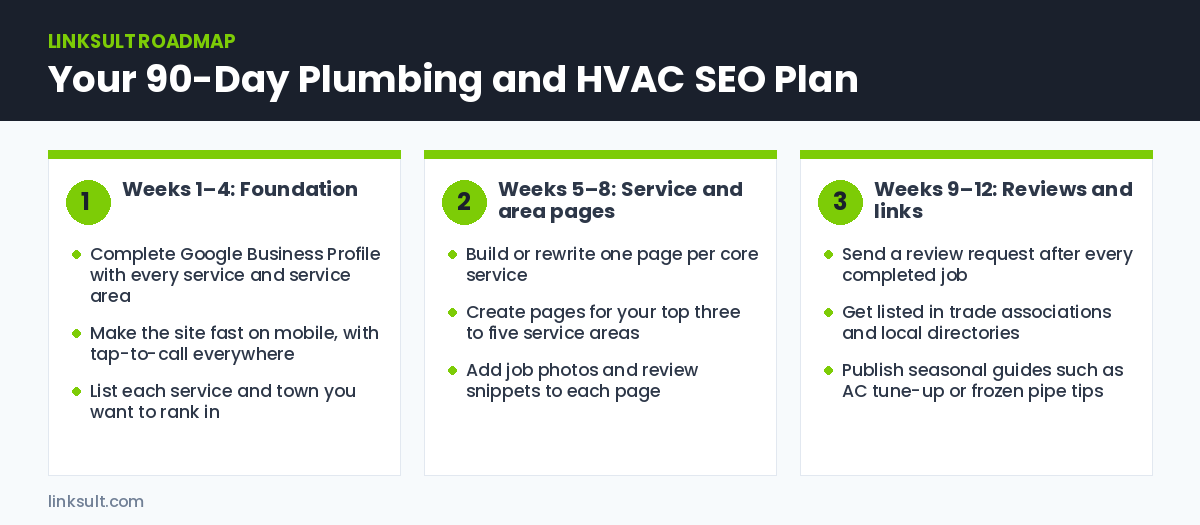
Weeks 1–4: Foundation
- Complete Google Business Profile with every service and service area
- Make the site fast on mobile, with tap-to-call everywhere
- List each service and town you want to rank in
Weeks 5–8: Service and area pages
- Build or rewrite one page per core service
- Create pages for your top three to five service areas
- Add job photos and review snippets to each page
Weeks 9–12: Reviews and links
- Send a review request after every completed job
- Get listed in trade associations and local directories
- Publish seasonal guides such as AC tune-up or frozen pipe tips
Conclusion
For plumbers and HVAC companies, SEO comes down to showing up in the map pack, matching the exact service someone needs and making it easy to call. Get your Google Business Profile, service pages and review process right first, then add seasonal content and local links.
How Linksult Can Help Plumbing and HVAC
If you want expert help putting this guide into action, our plumbing marketing and HVAC marketing services cover everything above, from research and fixes to content, links and clear monthly reporting.
Want every new lead answered in minutes? Our marketing automation services follow up by text, email and WhatsApp automatically, so fewer leads slip away.
Explore more strategies in our SEO guide by industry, or request a free SEO quote for a plan built around your business.
Let Linksult handle your Home Services SEO
Let Linksult help you reach more homeowners and clients online

