

In today’s digital age, educational institutions need to prioritize their academic reputation to attract students, parents, and faculty members. A well-optimized website is crucial for staying competitive in a world where many students and parents increasingly rely on search engines to make informed decisions. Moreover, with 93% of all internet traffic generated from search engines, having a strong SEO strategy for educational institutions is essential for schools, colleges, universities, and online learning platforms to enhance their visibility and remain relevant. Implementing on-page SEO for schools and focusing on local SEO techniques can further drive organic traffic and improve search rankings.
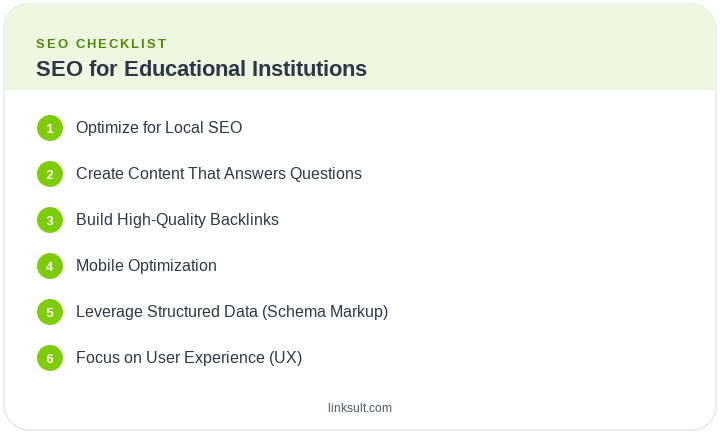
This guide will explore SEO strategies for educational institutions, including content marketing and keyword research. We’ll cover off-page SEO tactics, like building backlinks, and the importance of user experience. You’ll also learn how to conduct SEO audits for educational websites. With examples and FAQs, this resource highlights optimizing your website to boost search rankings and attract prospective students.
Why SEO Matters for Educational Institutions
Educational institutions face unique SEO challenges. Whether it’s an elementary school, a large university, or a specialized online education platform, potential students and parents are turning to search engines like Google to find and compare options. Implementing an effective SEO strategy ensures your institution is visible to your target audience, driving organic traffic to your website and improving overall enrollment rates.
Without a strong digital presence, educational institutions risk being overlooked by prospective students.1. Optimize for Local SEO
Educational institutions are heavily dependent on attracting students from their local regions, making local SEO one of the most critical aspects of SEO strategy. Local SEO involves optimizing your website so that it appears in local search results, such as “universities in [city]” or “private schools near me.”
Tips for Local SEO:
- Google Business Profile: Make sure your school or institution has a Google Business Profile listing. Fill out all details such as address, contact information, and hours of operation, and add photos of your campus. This listing helps you appear in local search results and the Google Map Pack, which can significantly boost visibility.
- Local Keywords: Use location-based keywords throughout your site. Phrases like “top universities in New York City” or “private schools in San Diego” can improve your visibility for searches related to your geographical location.
- NAP Consistency: Ensure that your Name, Address, and Phone Number (NAP) are consistent across your website and other directories, such as Yelp or local education directories. Consistent information builds trust with search engines and improves your local SEO ranking.
If you’re running a private high school in Boston, optimizing for terms like “best private high schools in Boston” and “Boston secondary schools” will help you rank higher in local search queries, attracting more local traffic.
2. Create Content That Answers Questions
Content is the backbone of any SEO strategy. For educational institutions, creating high-quality, informative content strategy covert to what prospective students and parents are searching for can significantly boost your website’s search engine ranking.
Content Strategies:
Writing in-depth guides, FAQs, and informational blog posts can significantly increase your site’s traffic.
- FAQs and Informational Pages: Prospective students have questions about tuition fees, programs, campus life, application processes, etc. Create dedicated pages or blog posts that address these questions. Not only does this help answer user queries, but it also boosts your site’s relevance for long-tail keywords. Example: A university could have pages like “How to Apply for Financial Aid” or “What to Expect in Your First Year on Campus.” Such content provides value to prospective students and families while targeting specific search queries.
- Program-Specific Content: Create in-depth content about individual programs or departments, using keywords related to those fields of study. For instance, a business school could target keywords like “top MBA programs in [region]” or “online business degrees.”
3. Build High-Quality Backlinks
Backlinks remain one of the most powerful ranking factors in Google’s algorithm. A backlink is when another website links to your site, signaling to search engines that your content is credible and authoritative. Educational institutions can benefit from building backlinks to boost their domain authority and overall rankings.
Tips for Building Backlinks:
- Collaborations and Partnerships: Partner with other schools, universities, or education-related blogs. Offer to contribute guest posts or collaborate on research articles, linking back to your institution’s website in return. Example: A university’s psychology department could collaborate with a local mental health organization on a public awareness campaign. If the organization links back to the university’s research page, this backlink enhances the university’s credibility.
- Alumni Networks: Alumni and associated businesses often link back to their alma mater.
4. Mobile Optimization
Mostly users use mobile devices for searching, having a mobile-friendly website is inalienable. Google prioritizes mobile-first indexing, meaning that the mobile version of your site is what it primarily considers when determining rankings.
Tips for Mobile Optimization:
- Responsive Design: Make sure your website uses responsive design that alter automatically to different screen sizes, whether viewed on a mobile phone, tablet, or desktop.
- Fast Load Times: Compress images and eliminate unnecessary JavaScript or CSS that could slow down your page loading times. A faster website not only impact on user experience but is also on ranking factor for Google.Statistical Insight: Google found that 53% of mobile user websites that take more than 3 seconds to load. Faster your mobile website can significantly decrease bounce rates and improve SEO.
5. Leverage Structured Data (Schema Markup)
Structured data (also known as schema markup) helps search engines to understand the blog of your website better. For educational institutions, technical SEO can improve how your site appears in search results by mentioned your fragment like contact details, course offerings, and campus locations.
How to Implement Structured Data:
- Course Schema: Use schema markup to describe course offerings, including program details, dates, and campus information. This will help search engines display relevant information directly on the search results page. Example: A university can use schema to showcase course names, degrees offered, and campus locations, which helps improve visibility when prospective students search for programs like “online computer science degree.”
- Event Schema: If your institution hosts events like open houses, career fairs, or webinars, use event schema markup. This makes it easier for search engines to display your event in search results with dates, times, and location details.
6. Focus on User Experience (UX)
According to Google’s algorithm well optimized websites that deliver a great user experience. This means your site should be easy to navigate, with intuitive menus, clear calls to action, and engaging multimedia content.
Tips for Improving User Experience:
- Clear Navigation: Make sure your students can easily find information about programs, admissions, financial aid, and campus lifestyle.
- Interactive Features: Consider adding chatbots, interactive campus maps, and tours to improve the user experience and engagement.
- Call to Action (CTA): Use prominent CTAs like “Apply Now” or “Schedule a Campus Tour” to guide users toward conversion.
Key Local SEO Strategies for Schools and Universities
1. Claim and Optimize Google Business Profile
Google Business Profile is the foundation of local SEO for educational institutions. It’s a free tool provided by Google that allows institutes to manage their online presence on Google, including Search and Maps. A properly optimized Google Business Profile helps increase visibility and boosts credibility.
Key Steps for Google Business Profile Optimization:
- Claim Your Google Business Profile: If you haven’t already claimed your Google Business Profile, this should be the first step. Make sure you have accurate information about your institution.
- Complete Your Profile: Ensure your profile is complete with details such as institution name, address, phone number, website, business hours, and student testimonials.
- Add Photos: Upload high-quality images of your campus, classrooms, events, and student activities to showcase the institution’s environment.
- Request and Respond to Reviews: Encourage students and alumni to leave reviews about their experiences. Positive reviews enhance your credibility and increase your ranking in local search results.
2. Optimize for Location-Based Keywords
For schools and universities, the use of local keywords is a crucial aspect of content strategy. Prospective students are likely to search for institutions with location-specific keywords such as “schools in [City Name]” or “universities near me.”
How to Find Local Keywords:
- Google Keyword Planner: Use this tool to find keywords related to your programs and your city.
- Competitor Research: Check which local keywords your competitors are targeting.
- Local Intent Keywords: Examples include “Best high schools in [City Name],” “Top universities near [City Name],” or “Best community colleges in [State].”
Optimize your website’s course pages, program descriptions, and blog posts by incorporating these local keywords naturally. This will help search engines better understand your location and relevance for local search queries.
A school located in San Francisco can target keywords such as “San Francisco high school programs,” “Colleges in San Francisco,” or “best community college in SF.”
3. Create Location-Based Content
Another essential part of local SEO for schools and universities is creating valuable content that focuses on the local community and the institution’s involvement in local affairs. This not only helps improve local rankings but also positions your institution as a vital part of the local area.
Types of Location-Based Content:
- Local Event Pages: Create blog posts or landing pages that feature local events your school or university is hosting or participating in. Examples include open houses, community service programs, and charity events.
- Local News and Stories: Write about local alumni, faculty members, or achievements that have impacted the local community.
- Student Life in Your Area: Share articles or videos that describe student life in your city or region.
4. Build Local Citations
A local citation is any online mention of your institution’s name, address, and phone number (NAP) on directories, social platforms, or review sites. Consistency across all online platforms is key to boosting your local SEO.
How to Build Citations:
- Submit to Local Directories: List your school or university on local directories like Yelp, Yellow Pages, and local education portals.
- Use Educational Directories: There are several directories specifically for educational institutions, such as Niche.com or U.S. News & World Report’s Education Section, where you can create profiles for your school.
- Local Chamber of Commerce: Get listed in your local Chamber of Commerce’s directory or regional business listings.
Citations improve your institution’s visibility and ensure that your NAP information is consistent across all platforms, which is a significant ranking factor for local SEO.
5. Optimize for Mobile Search
With more students use mobile devices for online search engine, particularly for local queries, your institution’s website should be mobile-friendly to build the excellent user experience and improve your local SEO rankings.
Mobile Optimization Tips:
- Responsive Design: Ensure that your website design adapts to various screen sizes and devices, especially smartphones.
- Fast Load Times: Mobile users expect fast-loading websites. Compress images and optimize your website’s code to improve load times.
- Clear Navigation: Make it easy for mobile users to find key information like course details, application forms, and contact information.
Conclusion
For educational institutions, an effective SEO strategy is vital for increasing visibility, driving organic traffic, and boosting enrollment. By focusing on local SEO techniques, conducting keyword research, creating valuable content marketing, building quality backlinks, and ensuring a mobile-friendly design, institutions can enhance their search engine rankings. These strategies not only attract prospective students but also provide a seamless experience that encourages conversions, positioning schools as leaders in the competitive online landscape.
How Linksult Can Help Educational Institutions
If you want expert help putting this guide into action, our SEO content strategy services cover everything above, from research and fixes to content, links and clear monthly reporting.
Explore more strategies in our SEO guide by industry, or request a free SEO quote for a plan built around your business.
Let Linksult handle your Education SEO
Linksult optimizes your site to attract more students and educators.

